THE CATHEDRALS OF AMERICAN FOOTBALL: A JOURNEY TO THE HEART OF THE USA’S LEGENDARY STADIUMS
Updated: Oct 31

With less than two weeks to go before the long-awaited release of the NFL schedule, it’s the perfect time to start dreaming. Whether you’re a fan of big-time clashes or someone who thrives on sports adventures, now is the ideal moment to imagine your next road trip, one that could plunge you into the heart of the action next season.
From colossal silhouettes carved into urban skylines to mythical arenas nestled in the heart of rural America, NFL and college football stadiums embody the true soul of American football. More than just sporting venues, they are monuments where the story of this sport is written every weekend. They are guardians of culture and witnesses to a nationwide passion.
Sure, video games like NCAA College Football or Madden NFL offer striking immersion with painstakingly recreated stadiums. Yes, 4K replays on YouTube showcase the unique architecture of each arena. But nothing, absolutely nothing, compares to experiencing a live game. Smelling the tailgate barbecue, hearing a crowd roar on a crucial third down, watching traditions unfold before your eyes, witnessing legendary moments powered by world-class athletes, or simply gazing up to admire the majesty of the stands and the breathtaking landscapes surrounding some of football’s holiest grounds.
With NorthSideline, we had the chance to step inside several of these iconic venues. Here’s our field report, stadium by stadium.
College Football:

Notre Dame Stadium (South Bend, Indiana)
Attending a game at Notre Dame is like stepping back in time, into the very heart of college football history. Built in 1930 and later renovated, the stadium’s gothic style evokes the feel of grand European universities. It sits on a campus that resembles a cloister, filled with as many believers as fans.
But what makes the place truly magical is the benevolent gaze of Touchdown Jesus, a massive mural of Christ on the Hesburgh Library façade, visible from the north stands and seemingly blessing every successful pass. A spiritual, athletic, and profoundly American experience.
Husky Stadium (Seattle, Washington)
Located on the shores of Lake Washington and surrounded by mountains, Husky Stadium is a visual marvel. Since 2024, it’s been part of the Big Ten Conference, joining the college football elite. The energy is electric, fueled by purple-and-gold-clad fans who never miss a beat.
Nicknamed “The Greatest Setting in College Football,” the title is well deserved. Beyond the natural beauty, it’s known for its unique tradition: the “Boatgate.” Just offshore, dozens of boats gather on game day, creating a floating tailgate party. It’s pure Seattle, festive, scenic, unforgettable.

Autzen Stadium (Eugene, Oregon)
Tucked into a lush green setting, Autzen Stadium is a paradox. With an official capacity of about 54,000, it’s not the biggest, but it’s among the loudest in college football. Ducks fans make themselves heard, and the bowl shape of the stadium amplifies every cheer, every chant, every “Oregon! Go Ducks!”
The entrance path winds through a peaceful forest, almost meditative, until you step into the roaring cauldron of the Northwest. The contrast is stunning. From chrome helmets to the “Shout” in the 3rd quarter, traditions make the experience unforgettable.

The Big House (Ann Arbor, Michigan)
The name fits. With 107,601 seats, Michigan Stadium is the largest in the U.S. and the third-largest in the world. It dwarfs even giants like AT&T Stadium (Cowboys, ~80,000 expandable) and the Azteca Stadium in Mexico (~87,000).
And yet, despite its massive size, the acoustics are stunning. When over 100,000 fans sing “Hail to the Victors,” the earth trembles. Entry to the arena is unassuming, but once inside, the sheer scale overwhelms. Every game is a celebration of college football tradition.

Los Angeles Memorial Coliseum (LA, California)
You can’t separate the Coliseum from American sports history. Built in 1923, it has hosted two Olympic Games, countless NFL and NCAA legends, and iconic concerts. It’s the home of the USC Trojans, one of college football’s most storied programs.
Its Roman-inspired architecture, eternal Olympic flame, and signature arches make every game feel like a walk through history. It’s not the newest or most comfortable, but it’s a sanctuary.

Clarence T.C. Ching Complex (Honolulu, Hawai’i)
Since 2021, the Rainbow Warriors have played in this temporary stadium with fewer than 15,000 seats, located right on the University of Hawai’i campus. Yet the atmosphere is unbeatable.
Far from the mainland noise, here the vibe is relaxed. Ukuleles strumming, food trucks lining the paths, fans in flower leis. You can stroll the track surrounding the field, meet the players during warmups, chat with locals. It’s football, Polynesian-style. Unforgettable.

Rose Bowl (UCLA Bruins – Pasadena, California)
Legendary. Eternal. The Rose Bowl is more than a stadium, it’s a cultural monument. It hosts the “Granddaddy of Them All” every January 1st, but even regular-season games feel special.
The amphitheater-style design offers excellent views from every seat, and as the sun sets over the San Gabriel Mountains, the backdrop turns postcard-perfect. You’re not just watching football, you’re soaking in America.

Gesa Field (Washington State – Pullman)
Pullman captures rural America in all its glory. Gesa Field is surrounded by vast fields, offering a 360° panoramic view. Game day here feels like a family reunion, where everyone knows each other.
It’s not a large stadium, but it oozes authenticity. Old-school football, no frills. A full-on immersion into the soul of college football.

Spartan Stadium (Michigan State – East Lansing)
With over 75,000 seats, Spartan Stadium is a Big Ten stronghold. Nestled in a vibrant campus, it turns green on game days, as the city transforms into football central.
The atmosphere is intense, especially during rivalry games with Michigan or Penn State. A blend of deep-rooted traditions and a loud, youthful crowd. It’s more than a game, it’s about defending your colors.

Hancock Whitney Stadium (South Alabama Jaguars – Mobile, Alabama)
In the charming port city of Mobile, Hancock Whitney Stadium offers a modern, intimate venue since opening in 2020. It’s home to the South Alabama Jaguars, with palm trees and Southern charm aplenty.
But what sets it apart is its role as the new home of the Senior Bowl, the premier pre-draft event in the NFL calendar. Each winter, top college prospects showcase their talent here in front of scouts and execs, making Mobile a must-visit for fans of raw football talent.
NFL:

Lumen Field (Seattle Seahawks – Seattle, Washington)
In the heart of Seattle, Lumen Field is renowned as one of the loudest stadiums in the NFL, thanks to its famed 12th Man. Its architecture is designed to amplify crowd noise, creating relentless pressure on visiting teams. Every snap is met with an electrifying roar.
From the upper levels, the views are breathtaking. On one side, the downtown skyline, on the other, the ocean and mountains. The stadium merges explosive atmosphere with stunning natural surroundings. Add in a strong tailgate culture, and you get one of the most vibrant and intimidating venues in the country.

AT&T Stadium (Dallas Cowboys – Arlington, Texas)
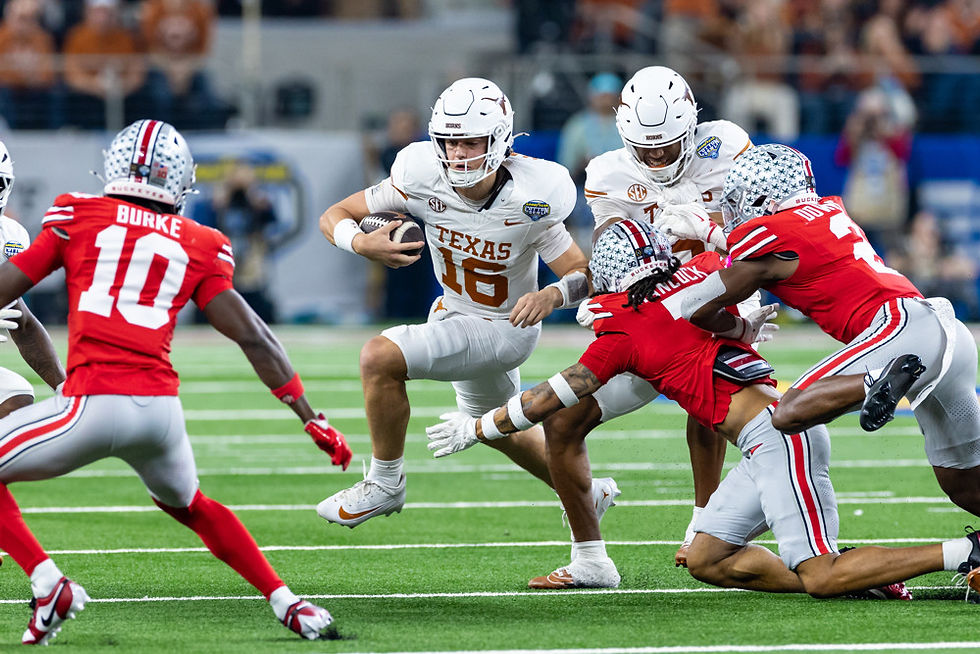
AT&T Stadium isn’t just a stadium. It’s a technological marvel, a modern temple of football designed to impress. Built for nearly $1.2 billion, it is the home of the Dallas Cowboys, also known as “America’s Team,” and it hosts major events like the Cotton Bowl, a staple of college football.
With 80,000 seats expandable to over 100,000, a 50-meter-wide video board hanging above the field, and ultra-luxurious suites, every detail is made for spectacle. You enter the arena as if stepping into a futuristic casino, yet with the heart of Texas football.

Mercedes-Benz Stadium (Atlanta Falcons - Georgia)
On the outside, a futuristic geometric shell. Inside, a cathedral of light. Mercedes-Benz Stadium, opened in 2017, is an architectural and engineering marvel. Its retractable roof shaped like a camera lens and 360° circular LED screen, the largest in the world, offer an unmatched experience.
What also sets it apart is its dual-purpose design for college football. With two massive locker rooms accommodating over 100 players each, it’s built for NCAA rosters. Atlanta frequently hosts SEC championship games, the Peach Bowl, and other major matchups here. A seamless blend of innovation and Southern tradition.

SoFi Stadium (Los Angeles Rams & Los Angeles Chargers – Inglewood, California)
SoFi Stadium captures the California dream. Palm trees, fountains at the entrance, and near-constant blue skies set the tone. But behind the paradise lies a technological wonder.
With a double-sided suspended video board, spiral seating, and immersive VIP zones, every inch is crafted for elite sports and entertainment. This isn’t just a football game, it’s a Hollywood-level experience. Even entering the stadium feels like walking a red carpet.

MetLife Stadium (New York Giants & New York Jets – East Rutherford, New Jersey)
Subway, tunnel, suburbs… and then MetLife Stadium rises, just outside Manhattan in East Rutherford, New Jersey. It’s the largest stadium in the NFL with a capacity of 82,500, shared by the New York Giants and New York Jets.
Its exterior is massive, gray, almost brutalist, but inside it’s functional, well-designed, and roaring during marquee matchups. It may not be the coziest stadium, but its franchises’ history and the fierce New York fanbase create undeniable tension. And the Manhattan skyline in the distance reminds you you’re in the media capital of America.

Hard Rock Stadium (Miami Dolphins – Miami Gardens, Florida)
Tropical vibe, palm trees at the gates, blue skies year-round. Hard Rock Stadium reflects Florida itself. Heavily renovated, it now offers a premium experience with shaded areas, excellent sightlines, and high-quality sound systems.
But its real charm lies in the cultural melting pot that is Miami. Latin music, flashy jerseys, and a laid-back vibe make for a unique energy. Here, football is lived at the crossroads of cultures in a never-ending turquoise and orange party.

State Farm Stadium (Arizona Cardinals – Glendale, Arizona)
Set in the desert, State Farm Stadium is a modern architectural gem. With a retractable roof, roll-out natural turf, and finely tuned climate control, it’s built for peak performance and fan comfort.
Sunlight filtered through tinted glass adds a warm, almost intimate glow. But when Cardinals fans erupt, the energy skyrockets. It’s where maximum comfort meets maximum football passion.

M&T Bank Stadium (Baltimore Ravens – Baltimore, Maryland)
In the industrial shadows of Baltimore’s harbor, M&T Bank Stadium exudes grit. It’s not the largest or the flashiest, but it’s steeped in pure football DNA: tough defense and raw intensity.
Ravens fans are among the NFL’s most loyal, and on game days, the whole city pulses with energy. Its proximity to Camden Yards only enhances the area’s all-sport feel. The perfect home for a team that mirrors its city: resilient, real, and fiercely proud.

NRG Stadium (Houston Texans – Houston, Texas)
With a retractable roof and strong air conditioning, NRG Stadium is built to withstand Texas extremes. A multi-use facility, it hosts everything from Super Bowls to rodeos and concerts.
The interior is modern and spacious, but it truly comes alive on NFL Sundays. Texans fans are loud, loyal, and proud. Even if the team isn’t always in playoff contention, the passion never fades. In Houston, football and local pride are inseparable.

Empower Field at Mile High (Denver Broncos – Denver, Colorado)
At over 5,200 feet above sea level, Empower Field lives up to its nickname “Mile High.” You can physically feel the altitude — even as a fan. That natural factor, combined with Broncos fan passion, creates a one-of-a-kind atmosphere.
With the Rocky Mountains in the background, crisp Denver air, and a sea of orange in the stands, every game here is a multisensory experience. It embodies Midwest football spirit: gritty, loyal, and deeply rooted.

FedExField (Washington Commanders – Landover, Maryland)
Often criticized for aging facilities, FedExField still holds a certain magic. Located far from downtown D.C., it’s home to one of the NFL’s oldest and most storied franchises, now in the midst of an identity revival.
While it may not meet the latest standards, its game-day atmosphere remains electric. Rumors of a new stadium even inspire nostalgia among longtime fans.

Allegiant Stadium (Las Vegas Raiders, Nevada)
Nicknamed “The Death Star,” Allegiant Stadium is one of the newest and most spectacular venues in the NFL. Entirely black, angular, and luxurious, it rises like a spaceship at the edge of Las Vegas.
Inside, everything screams showtime. Giant screens, golden suites, perfectly calibrated sound. Fans come not just to watch the Raiders, but to experience a full-scale event. Vegas finally has its team, and its stadium lives up to the glitz.

Paycor Stadium (Cincinnati Bengals, Ohio)
Set along the banks of the Ohio River in downtown Cincinnati, Paycor Stadium is a prime example of urban integration. Fans walk in from surrounding bars and restaurants, creating a festive vibe before kickoff.
The stands’ proximity to the field makes for an intense experience. You feel the game. You breathe it. And in a human-sized venue, every cheer carries more weight. It’s a place that pulls you into the action, both physically and emotionally.

Soldier Field (Chicago Bears, Illinois)
Old school. Authentic. Soldier Field is a stronghold of tradition in the heart of Chicago. Flanked by Lake Michigan and the city’s skyline, it offers stunning views and raw atmosphere.
The neoclassical exterior contrasts with its modern interior, and that contrast is exactly what makes it special. The cold, often bitter wind is part of the experience. This is how football is played in Chicago: tough, honest, and without frills.

Camping World Stadium (Orlando, Florida – Pro Bowl, NCAA Bowls)
Located in the heart of Orlando, Camping World Stadium still hosts the NFL Pro Bowl, bringing together the league’s top players in a laid-back, festive setting. It also welcomes key NCAA bowl games like the Citrus Bowl and the Pop-Tarts Bowl.
It may not be the most modern stadium, but it wins points for charm, central location, and the opportunity to combine football with nearby theme park adventures. Here, football is fun and accessible — Florida style.
Conclusion
Whether ultra-modern like SoFi Stadium, steeped in history like Notre Dame Stadium, nestled between mountains and ocean like Husky Stadium, or surrounded by fields like Gesa Field, these stadiums represent the diverse soul of American football.
Each tells a different story, but all share the power to transform a simple game into an unforgettable experience.
To truly understand American football, you have to live it inside these sacred cathedrals, where every Sunday the story continues to be written on pristine turf under the eyes of thousands of believers united by one passion. The thrill of a fourth-quarter drive, the crowd’s roar, the scent of BBQ in the parking lot, the view from the stands — it’s a complete sensory journey that no screen can ever replicate.
From the 107,601-seat roar of The Big House to the intimate vibe of Clarence T.C. Ching Complex, these stadiums are the true keepers of America’s football identity. It is within these temples that the game’s heart beats loudest.