


BIG 12 Football Media Days 2026 : ambitions mondiales, Texas Tech favori et bataille pour l'avenir du college football
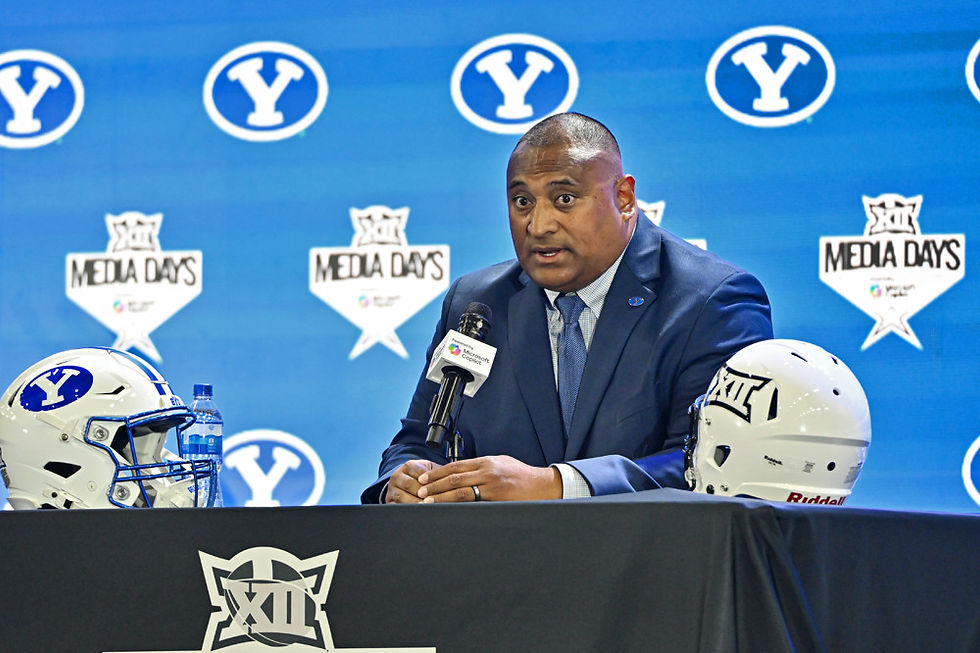
Le coup d'envoi officieux de la saison 2026 de college football a été donné les 7 et 8 juillet au Star de Frisco, au Texas. Pendant deux jours, les seize entraîneurs de la Big 12, leurs représentants joueurs et le commissaire Brett Yormark se sont succédé devant les caméras d'ESPNU.
Peu de révélations sportives, mais une certitude : la Big 12 ne compte plus se contenter du rôle de troisième force du college football. À Frisco, son message était clair : accélérer sa transformation pour gagner en influence, aux États-Unis comme à l'international.
À un peu plus d'un mois de la reprise, ces media days constituaient le premier véritable baromètre de la saison : ambitions des favoris, grandes tendances sportives, enjeux économiques et positionnement politique de la conférence. Voici les principaux enseignements.
Yormark et le rêve d'une Big 12 « globale »
Dès son arrivée au pupitre, Brett Yormark a donné le ton. Plus qu'un simple état des lieux, son intervention ressemblait à une véritable feuille de route. Son ambition reste inchangée : faire de la Big 12 « la conférence la plus globalement pertinente du sport universitaire ».
Cette vision se traduit déjà dans le calendrier. La ligue disputera deux rencontres à l'étranger cette saison : TCU affrontera North Carolina à Dublin lors de la « Zero Week », avant qu'Arizona State et Kansas ne se retrouvent à Wembley, à Londres.
Pour justifier cette orientation, le commissaire s'est appuyé sur plusieurs chiffres. Selon lui, 14 % des étudiants-athlètes de la conférence viennent de l'étranger et six universités disposent désormais d'un campus hors des États-Unis. Arizona State en ouvrira même un à Londres dès cet automne.
« Notre style de football voyage. Il est rapide, dynamique et spectaculaire », a résumé Yormark.
Derrière le discours académique se cache toutefois une logique économique claire : conquérir de nouveaux marchés, attirer davantage de partenaires et accroître la visibilité internationale de la conférence. Une stratégie qui distingue aujourd'hui la Big 12 de ses concurrentes, davantage concentrées sur leur domination nationale.
Monster Energy s'affiche partout
Sur le plan commercial, l'annonce la plus importante est venue du sponsoring.
Brett Yormark a dévoilé un partenariat renforcé avec Monster Energy, désormais sponsor-titre de la conférence. Déjà boisson énergisante officielle de la Big 12 depuis un an, la marque donne désormais son nom à l'événement, rebaptisé 2026 Monster Energy Big 12 Football Media Days.
Le commissaire a présenté cet accord pluriannuel estimé à environ 20 millions de dollars par an, comme un partenariat « premier du genre ». Il couvre également le basketball et sera visible sur les terrains ainsi que sur un patch de maillot.
Au-delà de son aspect marketing, cette entente illustre parfaitement la stratégie de la conférence : s'associer à une marque présente dans près de 159 pays afin d'accompagner son développement international.
L'ombre de l'affaire Sorsby
Impossible de revenir sur ces media days sans évoquer Brendan Sorsby.
Arrivé cet hiver à Texas Tech avec l'étiquette de meilleur quarterback du portail des transferts après son passage à Cincinnati, il devait devenir le nouveau visage des Red Raiders.
Quelques mois ont suffi pour faire basculer le scénario.
Visé par une enquête de la NCAA pour des paris sportifs estimés à plus de 90 000 dollars, portant notamment sur son ancienne équipe d'Indiana, Sorsby a d'abord obtenu en justice une injonction lui permettant de retrouver le terrain, avant de finalement renoncer au college football en juin afin de préparer plus rapidement son passage vers la NFL (qui lui refusa d'ailleurs l'accès à une supplemental draft) et devra attendre la draft 2027.
Son départ a mis un terme au dossier de son éligibilité, mais a laissé des tensions entre Texas Tech et le bureau de la conférence.
Interrogé sur le sujet, Brett Yormark a préféré éluder les questions. Joey McGuire, lui, a choisi de les affronter.
« L'adversité partagée nous rapproche encore davantage », a déclaré l'entraîneur des Red Raiders, déterminé à tourner la page et à recentrer son groupe sur la saison.
Sur le plan sportif, pourtant, Texas Tech reste considéré comme le grand favori de la conférence.
McGuire a indiqué voir Will Hammond débuter dès le premier match. Le redshirt sophomore, révélé la saison dernière après la blessure de Behren Morton, revient toutefois d'une rupture des ligaments croisés subie face à Oklahoma State. Sa progression constituera l'une des principales inconnues de la saison.
Un favori… et une surprise
Pour la deuxième année consécutive, la Big 12 a renoncé à publier un sondage préseason officiel, une décision héritée de 2024 lorsque Arizona State, annoncé dernier avant la saison, avait finalement remporté la conférence.
Les médias ont néanmoins établi leur propre hiérarchie.
Texas Tech en est ressorti comme le favori quasi unanime, devant un BYU jugé plus stable au poste de quarterback. Arizona, Houston et Utah complètent le groupe des principaux prétendants.
Fait intéressant, un sondage distinct réalisé par On3 auprès des entraîneurs a livré un verdict différent : BYU, et non Texas Tech, y apparaît comme le favori de la conférence.
Kalani Sitake, de son côté, continue de balayer ces pronostics d'un revers de main.
« Ils se trompent à chaque fois, c'est pour ça que la ligue a cessé d'en faire », a lancé le coach des Cougars, rappelant que BYU était annoncé treizième il y a deux ans, tandis qu'Arizona State occupait la dernière place.
Sur le plan individuel, Texas Tech a également marqué les esprits avec sept joueurs sélectionnés dans l'équipe-type préseason All-Big 12, dont cinq en défense, un total supérieur à celui de tous les autres programmes.
Le defensive lineman A.J. Holmes Jr. a été désigné joueur défensif préseason de l'année, permettant aux Red Raiders d'enchaîner un deuxième lauréat consécutif après Jacob Rodriguez.
En coulisses : entraîneurs et quarterbacks
Ces media days ont également marqué les débuts de plusieurs nouveaux entraîneurs : Collin Klein (Kansas State), Morgan Scalley (Utah), Eric Morris (Oklahoma State) et Jimmy Rogers (Iowa State). Un renouvellement qui témoigne d'un nouveau cycle au sein de plusieurs programmes de la conférence.
Comme souvent, les quarterbacks ont monopolisé l'attention.
Bear Bachmeier (BYU), Julian Lewis (Colorado), Conner Weigman (Houston), Noah Fifita (Arizona), Avery Johnson (Kansas State) et Devon Dampier (Utah) figuraient parmi les joueurs les plus sollicités.
À propos de Fifita, Brent Brennan n'a pas caché son admiration.
« Noah Fifita est la plus belle histoire du college football. »
Le constat des observateurs est unanime : dans une conférence aussi ouverte, l'équipe dont le quarterback restera performant et en santé possédera un avantage considérable.
Parmi les nouveaux visages, Oklahoma State pourrait avoir frappé fort avec Drew Mestemaker.
Élu newcomer préseason de l'année après avoir mené toute la FBS aux yards à la passe sous les couleurs de North Texas, il retrouve avec Eric Morris le système Air Raid qui avait lancé son ascension. Certains observateurs en font déjà un potentiel choix de premier tour de la NFL.
Au-delà du football : argent et playoff
Brett Yormark a également abordé plusieurs dossiers majeurs pour l'avenir de la conférence.
Il s'est félicité d'une hausse de 182 % des revenus de sponsoring, tout en reconnaissant le fossé économique qui sépare encore la Big 12 de la SEC et du Big Ten. Pour réduire cet écart, la conférence continue d'explorer différentes solutions financières, notamment des accords de capitaux et des lignes de crédit.
Le commissaire s'est également montré favorable à une représentation plus importante de la Big 12 dans le College Football Playoff.
Restée sur un bilan de 0-2 depuis l'arrivée du format à douze équipes, la conférence estime néanmoins posséder suffisamment de profondeur pour envoyer plusieurs équipes capables de rivaliser au niveau national.
« Un accès élargi est nécessaire. Trop de grandes équipes restent encore à la porte », a plaidé Yormark.
Une conférence en pleine transformation
Ces Big 12 Football Media Days 2026 n'ont pas bouleversé la hiérarchie sportive. Ils ont toutefois confirmé une réalité beaucoup plus profonde.
La Big 12 ne veut plus simplement exister entre la SEC et le Big Ten. Elle cherche désormais à construire sa propre identité, en misant autant sur son développement économique et son rayonnement international que sur ses performances sportives.
Le discours est désormais posé. Reste à savoir si, dès les premiers entraînements du fall camp puis tout au long de l'automne, la conférence saura transformer cette ambition en résultats sur le terrain.
2026 BIG 12 Football Media Days: Global Ambitions, Texas Tech Favored, and the Battle for the Future of College Football
The unofficial kickoff to the 2026 college football season took place on July 7 and 8 at The Star in Frisco, Texas. Over two days, the Big 12's 16 head coaches, their player representatives and commissioner Brett Yormark took turns appearing before the ESPNU cameras.
There were few major football revelations, but one thing became clear: the Big 12 no longer intends to settle for being college football's third most powerful conference. In Frisco, its message was unmistakable: accelerate its transformation and expand its influence, both in the United States and internationally.
With just over a month remaining before the season begins, these media days offered the first true measuring stick of the year: the ambitions of the favorites, major on field trends, financial challenges and the conference's political positioning. Here are the main takeaways.
Yormark and the Dream of a "Global" Big 12
From the moment Brett Yormark stepped to the podium, he set the tone. More than a simple state of the conference address, his remarks sounded like a genuine roadmap. His ambition remains unchanged: to make the Big 12 "the most globally relevant conference in college athletics."
That vision is already reflected in the schedule. The conference will play two games overseas this season. TCU will face North Carolina in Dublin during Week Zero, before Arizona State and Kansas meet at Wembley Stadium in London.
To support that strategy, the commissioner pointed to several figures. According to Yormark, 14 percent of the conference's student athletes come from outside the United States, while six member institutions now operate campuses abroad. Arizona State is even set to open a campus in London this fall.
"Our style of football travels. It is fast, dynamic and exciting," Yormark said.
Behind the academic messaging, however, lies a clear economic strategy: enter new markets, attract more commercial partners and increase the conference's international visibility. It is an approach that now sets the Big 12 apart from its rivals, which remain more focused on strengthening their dominance at home.
Monster Energy Takes Center Stage
From a business standpoint, the biggest announcement involved sponsorship.
Brett Yormark unveiled an expanded partnership with Monster Energy, which is now the conference's title sponsor. Already the official energy drink of the Big 12 for the past year, the brand has also attached its name to the event, now called the 2026 Monster Energy Big 12 Football Media Days.
The commissioner described the multiyear agreement, reportedly worth approximately $20 million per year, as a "first of its kind" partnership. It also includes basketball and will feature branding on playing surfaces as well as a jersey patch.
Beyond the marketing component, the agreement perfectly reflects the conference's strategy: partnering with a company that operates in nearly 159 countries to support its international growth.
The Shadow of the Sorsby Case
It was impossible to discuss these media days without mentioning Brendan Sorsby.
After arriving at Texas Tech this winter as the top rated quarterback in the transfer portal following his time at Cincinnati, he was expected to become the new face of the Red Raiders.
It took only a few months for that storyline to unravel.
Sorsby became the subject of an NCAA investigation into an estimated $90,000 in sports wagers, including bets involving his former team at Indiana. He initially secured a court injunction allowing him to return to the field, but ultimately walked away from college football in June to begin preparing for the NFL sooner. The league later denied him access to a supplemental draft, meaning he will have to wait until the 2027 NFL Draft.
His departure brought the eligibility dispute to an end, but it also left lingering tensions between Texas Tech and the conference office.
Asked about the situation, Brett Yormark chose to avoid the questions. Joey McGuire, by contrast, addressed them directly.
"Shared adversity brings us even closer together," the Red Raiders head coach said, determined to move forward and refocus his team on the season ahead.
From a football perspective, however, Texas Tech is still widely viewed as the conference favorite.
McGuire said he expects Will Hammond to start the opening game. The redshirt sophomore emerged last season following Behren Morton's injury, but he is now returning from a torn ACL suffered against Oklahoma State. His recovery will be one of the season's biggest uncertainties.
A Favorite and a Surprise
For the second consecutive year, the Big 12 declined to release an official preseason poll, a decision shaped by the events of 2024, when Arizona State was projected to finish last and ultimately won the conference.
The media still created their own hierarchy.
Texas Tech emerged as the near unanimous favorite, ahead of a BYU team considered more stable at quarterback. Arizona, Houston and Utah rounded out the leading group of contenders.
Interestingly, a separate On3 poll of coaches produced a different result. BYU, not Texas Tech, was selected as the conference favorite.
Kalani Sitake, for his part, continues to dismiss such projections.
"They get it wrong every time. That's why the league stopped doing it," the BYU head coach said, noting that the Cougars were picked 13th two years ago while Arizona State was projected to finish last.
Individually, Texas Tech also made a strong impression by placing seven players on the preseason All Big 12 Team, including five defenders, more selections than any other program.
Defensive lineman A.J. Holmes Jr. was named Preseason Big 12 Defensive Player of the Year, giving the Red Raiders a second consecutive winner after Jacob Rodriguez.
Behind the Scenes: Coaches and Quarterbacks
These media days also marked the first appearances for several new head coaches: Collin Klein at Kansas State, Morgan Scalley at Utah, Eric Morris at Oklahoma State and Jimmy Rogers at Iowa State. Their arrivals reflect the beginning of a new cycle for several programs across the conference.
As usual, the quarterbacks drew much of the attention.
Bear Bachmeier of BYU, Julian Lewis of Colorado, Conner Weigman of Houston, Noah Fifita of Arizona, Avery Johnson of Kansas State and Devon Dampier of Utah were among the most sought after players.
When speaking about Fifita, Brent Brennan made no attempt to hide his admiration.
"Noah Fifita is the greatest story in college football."
The general consensus among observers was simple: in such a wide open conference, the team whose quarterback remains productive and healthy will hold a significant advantage.
Among the newcomers, Oklahoma State may have landed one of the most exciting players in Drew Mestemaker.
Named Preseason Newcomer of the Year after leading the entire FBS in passing yards at North Texas, he reunites with Eric Morris in the Air Raid system that fueled his rise. Some observers already view him as a potential first round NFL Draft pick.
Beyond Football: Money and the Playoff
Brett Yormark also addressed several major issues affecting the conference's future.
He highlighted a 182 percent increase in sponsorship revenue while acknowledging the financial gap that still separates the Big 12 from the SEC and Big Ten. To narrow that divide, the conference continues to explore different financial options, including capital agreements and lines of credit.
The commissioner also expressed support for greater Big 12 representation in the College Football Playoff.
The conference is 0 and 2 since the introduction of the 12 team format, but it still believes it has enough depth to send multiple teams capable of competing at the national level.
"Expanded access is necessary. Too many great teams are still being left out," Yormark argued.
A Conference in the Midst of Transformation
The 2026 Big 12 Football Media Days did not dramatically reshape the conference's competitive hierarchy. They did, however, confirm a much deeper reality.
The Big 12 no longer wants merely to exist between the SEC and the Big Ten. It is now trying to build its own identity, placing as much emphasis on economic growth and international reach as on success on the field.
The message has now been delivered. The question is whether, from the opening fall camp practices through the entire season, the conference can turn that ambition into results.


Comments