


Washington au bord de la crise après la démonstration d’Iowa

SEATTLE — Il aura fallu attendre plus de six décennies. Ce vendredi 9 octobre, pour la première fois depuis 1963, les Iowa Hawkeyes ont fait le voyage jusqu’à Seattle pour y disputer un match de football.
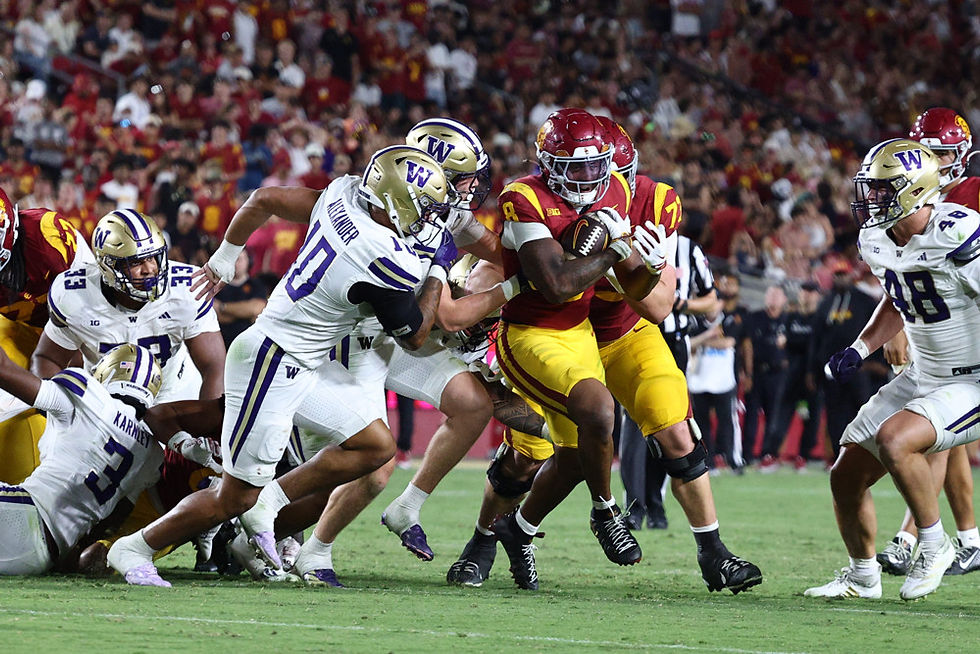
L’affiche, en Big Ten, opposait deux équipes aux dynamiques opposées. D’un côté, Iowa, 20e au classement (4-1), au parcours quasi irréprochable : sa seule défaite de la saison avait été concédée la semaine précédente face à Ohio State (31-14). De l’autre, Washington (3-2), dans la tourmente après un bon départ de saison. Les Huskies restaient sur deux revers face à des adversaires de Big Ten, Minnesota puis USC, deux défaites concédées de trois et quatre points qui laissaient un goût d’occasions manquées.
Les Huskies avaient aussi une revanche à prendre. Lors de leur dernière confrontation, en 2024 à Iowa City, les Hawkeyes s’étaient imposés 40-16. Un nouveau chapitre dans une histoire commune faite de rendez-vous marquants : Washington avait remporté les deux duels du Rose Bowl, en 1982 et 1991, avant qu’Iowa ne prenne sa revanche au Sun Bowl de 1995.
Pour sa troisième saison à la tête du programme, Jedd Fisch avait besoin d’une réaction, et comptait pour cela sur son quarterback Demond Williams Jr. Malgré leurs difficultés, les Huskies partaient d’ailleurs légèrement favoris devant leur public, de deux points et demi. Restait à savoir s’ils sauraient relever la tête face à une défense d’Iowa particulièrement hermétique contre la course, précisément le point faible de Washington cette saison. Fragilisés par les blessures de leurs deux meilleurs running backs, les Huskies n’avançaient en moyenne que de 3,7 yards par course avant ce match, quand la défense des Hawkeyes n’en concédait que 2,9.
La réponse est tombée très vite. À la mi-temps, sous la pluie de Seattle, le tableau d’affichage du Husky Stadium racontait une histoire que personne à Montlake n’avait envie de lire : Iowa 27, Washington 3. Et sur le sideline, une image plus inquiétante encore : Williams, le quarterback autour duquel tout le programme s’est construit cette saison, sorti de la tente médicale pour regarder, impuissant, la dernière série de la mi-temps se jouer sans lui.
Iowa s’est finalement imposé 41-24, sa première victoire dans le fuseau horaire du Pacifique depuis le Holiday Bowl 2019. Mais pour les Huskies, l’essentiel de la soirée s’est peut-être joué ailleurs que sur le tableau d’affichage.
Un rempart infranchissable
Les craintes d’avant-match se sont confirmées dès la première série. Sur un troisième essai, Preston Ries écrase Williams pour une perte de neuf yards. Cam Buffington l’imite quelques minutes plus tard, puis récidive au deuxième quart, juste avant que Jayden Montgomery ne fasse reculer Williams de 13 yards. Même Elijah Brown, entré juste avant la pause, n’y échappe pas : Ries le sacke à 21 secondes de la mi-temps.
Cinq sacks en une mi-temps, un sixième de Bryce Hawthorne après la pause. Washington enchaîne quatre three-and-out sur ses cinq premières possessions et rentre aux vestiaires avec 3 yards au sol et 109 yards au total, contre 279 pour Iowa.
Hecklinski sans trembler, Moulton sans pitié
On attendait Hank Brown, touché à l’articulation acromio-claviculaire de l’épaule de lancer contre Ohio State. C’est Jeremy Hecklinski qui a pris le relais pour la première titularisation de sa carrière, et il n’a jamais tremblé : 14 passes réussies sur 19, 202 yards, trois touchdowns, aucune interception.
Ses cibles ont été d’une efficacité redoutable. Le tight end DJ Vonnahme a vu le ballon deux fois, pour deux touchdowns : 20 yards au bout d’une feinte de course qui a piégé toute la défense sur un 3e et 1, puis 24 yards, complètement seul, après un punt relâché par Evan James mais récupéré par Ries. Reece Vander Zee a été l’homme des moments clés, avec une réception de 30 yards sur un 3e et 3 au premier quart, puis une prise de 31 yards et un touchdown de 8 yards au troisième (3 réceptions, 69 yards).
Mais le moteur, c’était Kamari Moulton. Son touchdown de 56 yards en fin de premier quart, où il perce au centre, casse un plaquage et efface un défenseur le long de la ligne de touche, a donné le ton. Il a ensuite effacé son record en carrière (183 yards contre Northern Illinois) avant d’inscrire un deuxième touchdown sur 3 yards au quatrième quart. Bilan : 208 yards en 26 courses, une semaine après avoir été limité à 27 yards par Ohio State.
Moins trois yards
En face, le chiffre résume tout : -3 yards au sol en 25 tentatives. Brian Bonner Jr. plafonne à 17 yards en 10 courses, et Williams termine à -8 yards en 11 courses, plombé par les sacks. Sans menace au sol, l’attaque de Washington est devenue prévisible, et Iowa l’a punie toute la soirée : 465 yards gagnés pour les Hawkeyes, dont 263 au sol, contre 317 pour les Huskies.
Une radio, puis le silence
Le seul rayon de lumière de la première mi-temps, un field goal de 30 yards de Tyler Robles, a eu un prix. Sur l’action précédente, un troisième essai à la ligne des 13 d’Iowa, Williams avait plongé au bout d’une course d’un yard avant d’encaisser un gros choc de Jacob Wallace et Montgomery. Il a passé toute la série défensive suivante dans la tente médicale, en est ressorti juste avant la dernière possession de la mi-temps, mais c’est Brown qui est entré. Williams n’est jamais réapparu après la pause.
Washington a indiqué pendant le match qu’il passait une radio au niveau du flanc et des côtes, et Fisch a confirmé au micro de FOX qu’il n’était pas formellement forfait. Selon le Seattle Times, des sources proches du dossier font état d’une blessure aux côtes et d’une évaluation pour une possible commotion. Après le match, Fisch n’avait aucune nouvelle à donner.
Sa première mi-temps n’avait rien de rassurant : 6 passes sur 11 pour 69 yards et quatre sacks encaissés. Mais elle s’est jouée derrière une ligne débordée de toutes parts, face à une défense d’Iowa au sommet de son intensité.
Elijah Brown, la lueur d’espoir
C’est là que la soirée change de ton. Au retour des vestiaires, Elijah Brown, transféré de Stanford, mène une série de huit jeux et 75 yards, conclue par un touchdown de 10 yards pour Chris Lawson. Puis une deuxième, de 11 jeux et 75 yards, aidée par plusieurs pénalités défensives d’Iowa, terminée par un touchdown de 2 yards pour Dezmen Roebuck et une conversion à deux points vers Lawson. 34-18.
Iowa a répondu à chaque fois, mais Brown n’a rien lâché. Sur la dernière action du match, il trouve Mason James pour un ultime touchdown de 3 yards. Bilan : 28 passes réussies sur 39 pour 251 yards, trois touchdowns et aucune interception, en à peine plus d’une mi-temps. Le tout après seulement deux répétitions avec la première équipe à l’entraînement cette semaine, selon Fisch.
Ses receveurs ont largement contribué à ce réveil offensif. Lawson a capté 8 ballons pour 86 yards et un touchdown, dont une réception de 22 yards en glissade sur un troisième essai. Roebuck totalise 8 réceptions pour 49 yards et un touchdown, Rashid Williams 5 pour 66 yards.
La question à 4 millions de dollars
Jedd Fisch pourrait-il confier les clés à Brown ? La question se pose, mais elle mérite de la prudence. En janvier, Williams a signé un contrat NIL estimé à environ 4 millions de dollars pour 2026, avant d’annoncer quelques jours plus tard son départ vers le portail des transferts, puis de faire volte-face. Washington était prêt à aller en justice pour faire respecter le contrat, et Fisch avait salué son retour comme une victoire.
Ce montant ne dit rien de la hiérarchie sur le terrain. Il dit en revanche à quel point le programme a misé sur Williams : un pari sportif, mais aussi d’image, et une relation reconstruite en public. Et la comparaison avec Brown doit tenir compte du contexte. Williams a joué la première mi-temps sous une pression constante, face à une défense d’Iowa qui n’avait encore rien concédé. Brown, lui, a évolué face à une équipe qui gérait une avance de plus de vingt points, et deux de ses séries ont profité de pénalités adverses. Son match reste remarquable de calme et de précision, mais une mi-temps ne remplace pas ce que Williams a montré depuis ses deux premières titularisations fin 2024, puis tout au long de 2025, sa première saison complète comme titulaire.
Le contexte, pourtant, pèse. Cette défaite laisse les Huskies à 3-3 et 0-3 en Big Ten, et les ambitions de la saison vacillent déjà. Fisch, qui avait présenté ce match comme un test grandeur nature, s’est dit surpris par l’écart physique entre les deux équipes. En conférence de presse, il a d’abord salué la gestion du match et la qualité des décisions de Brown. Et si l’état de Williams devait le tenir éloigné des terrains, Fisch n’aurait peut-être même pas à trancher.
Pour l’instant, une seule chose est sûre. Dans une soirée qui ressemblait à un naufrage, c’est le remplaçant qui a donné aux Huskies leur première vraie raison d’espérer.
Washington on the Brink of Crisis After Iowa’s Dominant Performance
SEATTLE — It took more than six decades. On Friday, Oct. 9, for the first time since 1963, the Iowa Hawkeyes made the trip to Seattle to play a football game.
The Big Ten matchup pitted two teams heading in opposite directions. On one side, No. 20 Iowa (4-1), with a near-spotless résumé: its only loss of the season had come the previous week against Ohio State (31-14). On the other, Washington (3-2), in turmoil after a solid start to the season. The Huskies were coming off two Big Ten losses, to Minnesota and then USC, both by three and four points, defeats that left a lingering sense of missed opportunities.
The Huskies also had a score to settle. In their last meeting, in 2024 in Iowa City, the Hawkeyes won 40-16. It was another chapter in a shared history full of memorable meetings: Washington won both Rose Bowl matchups, in 1982 and 1991, before Iowa got its revenge in the 1995 Sun Bowl.
In his third season at the helm, Jedd Fisch needed a response, and he was counting on quarterback Demond Williams Jr. to deliver it. Despite their struggles, the Huskies were slight favorites at home, by two and a half points. The question was whether they could stand up to an Iowa defense that had been especially stingy against the run, precisely Washington’s weak spot this season. Hampered by injuries to their top two running backs, the Huskies were averaging just 3.7 yards per carry entering the game, while the Hawkeyes’ defense was allowing only 2.9.
The answer came quickly. At halftime, in the Seattle rain, the Husky Stadium scoreboard told a story no one in Montlake wanted to read: Iowa 27, Washington 3. And on the sideline, an even more worrying image: Williams, the quarterback the entire program had been built around this season, out of the medical tent and watching helplessly as the final drive of the half played out without him.
Iowa went on to win 41-24, its first victory in the Pacific time zone since the 2019 Holiday Bowl. But for the Huskies, the most important part of the night may have unfolded somewhere other than on the scoreboard.
An Impenetrable Wall
The pregame fears were confirmed on the very first series. On third down, Preston Ries flattened Williams for a nine-yard loss. Cam Buffington followed suit a few minutes later, then struck again in the second quarter, just before Jayden Montgomery dropped Williams for a 13-yard loss. Even Elijah Brown, who came in just before the break, couldn’t escape: Ries sacked him with 21 seconds left in the half.
Five sacks in one half, plus a sixth from Bryce Hawthorne after the break. Washington went three-and-out on four of its first five possessions and headed to the locker room with 3 rushing yards and 109 total yards, compared with 279 for Iowa.
Hecklinski Unflappable, Moulton Unstoppable
Everyone expected Hank Brown, who sprained the AC joint in his throwing shoulder against Ohio State. Instead, Jeremy Hecklinski took over for the first start of his career, and he never flinched: 14-of-19 for 202 yards, three touchdowns and no interceptions.
His targets were ruthlessly efficient. Tight end DJ Vonnahme touched the ball twice, for two touchdowns: a 20-yarder off a play-action fake that fooled the entire defense on third-and-1, then a 24-yarder, wide open, after a punt muffed by Evan James but recovered by Ries. Reece Vander Zee was the go-to man in key moments, with a 30-yard catch on third-and-3 in the first quarter, then a 31-yard grab and an 8-yard touchdown in the third (3 catches, 69 yards).
But the engine was Kamari Moulton. His 56-yard touchdown late in the first quarter, bursting up the middle, breaking a tackle and juking a defender along the sideline, set the tone. He went on to break his career high (183 yards against Northern Illinois) before adding a second touchdown on a 3-yard run in the fourth quarter. Final line: 208 yards on 26 carries, one week after Ohio State held him to 27 yards.
Minus Three Yards
On the other side, one number says it all: minus-3 rushing yards on 25 attempts. Brian Bonner Jr. managed just 17 yards on 10 carries, and Williams finished with minus-8 yards on 11 carries, dragged down by the sacks. With no threat on the ground, Washington’s offense became predictable, and Iowa punished it all night: 465 yards of offense for the Hawkeyes, 263 of them on the ground, compared with 317 for the Huskies.
An X-Ray, Then Silence
The only bright spot of the first half, a 30-yard field goal by Tyler Robles, came at a price. On the previous play, a third down at the Iowa 13-yard line, Williams dove at the end of a 1-yard run and took a big hit from Jacob Wallace and Montgomery. He spent the entire ensuing defensive series in the medical tent and came out just before the final possession of the half, but it was Brown who went in. Williams never reappeared after halftime.
Washington said during the game that he was getting X-rays on his side and ribs, and Fisch confirmed on FOX that he had not been formally ruled out. According to The Seattle Times, sources with knowledge of the situation said Williams injured his ribs and was being evaluated for a possible concussion. After the game, Fisch had no update.
His first half offered little reassurance: 6-of-11 for 69 yards and four sacks taken. But it played out behind an offensive line overwhelmed at every turn, against an Iowa defense at the peak of its intensity.
Elijah Brown, the Glimmer of Hope
That’s when the night changed tone. Coming out of the locker room, Elijah Brown, a transfer from Stanford, led an eight-play, 75-yard drive capped by a 10-yard touchdown pass to Chris Lawson. Then another, an 11-play, 75-yard march helped by several Iowa defensive penalties, finished with a 2-yard touchdown to Dezmen Roebuck and a two-point conversion to Lawson. 34-18.
Iowa answered every time, but Brown never let up. On the final play of the game, he found Mason James for one last 3-yard touchdown. Final line: 28-of-39 for 251 yards, three touchdowns and no interceptions, in just over a half of play. All of it after only two first-team reps in practice this week, according to Fisch.
His receivers played a major role in that offensive revival. Lawson caught 8 passes for 86 yards and a touchdown, including a 22-yard sliding grab on third down. Roebuck finished with 8 catches for 49 yards and a touchdown, and Rashid Williams added 5 for 66 yards.
The $4 Million Question
Could Jedd Fisch hand the keys to Brown? The question is fair, but it calls for caution. In January, Williams signed an NIL deal reportedly worth about $4 million for 2026, then announced a few days later that he would enter the transfer portal, before reversing course. Washington was prepared to go to court to enforce the contract, and Fisch hailed his return as a win.
That figure says nothing about the depth chart. What it does show is how heavily the program has invested in Williams: a football bet, but also one of image, and a relationship rebuilt in public. And any comparison with Brown has to account for context. Williams played the first half under constant pressure, against an Iowa defense that had yet to give up anything. Brown, meanwhile, faced a team protecting a lead of more than 20 points, and two of his drives benefited from opposing penalties. His performance remains remarkable for its poise and precision, but one half doesn’t erase what Williams has shown since his first two starts at the end of 2024, and throughout 2025, his first full season as the starter.
Still, the circumstances weigh heavily. The loss drops the Huskies to 3-3 and 0-3 in the Big Ten, and the season’s ambitions are already wobbling. Fisch, who had framed this game as a true measuring stick, said he was surprised by the physical gap between the two teams. At his press conference, the first thing he highlighted was Brown’s game management and the quality of his decisions. And if Williams’ condition keeps him off the field, Fisch may not even have to make the call.
For now, one thing is certain. On a night that looked like a shipwreck, it was the backup who gave the Huskies their first real reason for hope.

Comments